Why Domino's Is Really a Tech Company That Happens to Sell Pizza
Domino's likes to say it's a technology company that sells pizza. It's only half joking — and it's a big reason it won.
Ask a Domino's executive what business they're in and you'll often get a surprising answer: technology. It sounds like a line. It isn't.
A large share of Domino's orders now come through digital channels — apps, websites, voice assistants, even a car and a smartwatch. The company built ordering into nearly every surface a customer touches, tracked orders in real time, and turned "where's my pizza" into a feature people actually enjoy watching.
Software as a moat Why does this matter for a pizza fight? Because software compounds in ways a dining room never can. Every order teaches the system something. Every improvement ships to thousands of stores at once. A better app is a permanent advantage; a nicer restaurant is a fixed cost.
Pizza Hut, weighed down by an older model and a sprawling footprint, spent years catching up on exactly the ground where Domino's had chosen to compete.
The pizza got you in the door. The software is why you came back — and why the competitor couldn't catch up.
The pattern behind the pattern This is the same move Domino's had made since the beginning: pick one dimension of the business and be the undisputed best in the world at it. In the 1970s that dimension was delivery speed. In the 2010s it was digital ordering. The dimension changed; the discipline didn't.
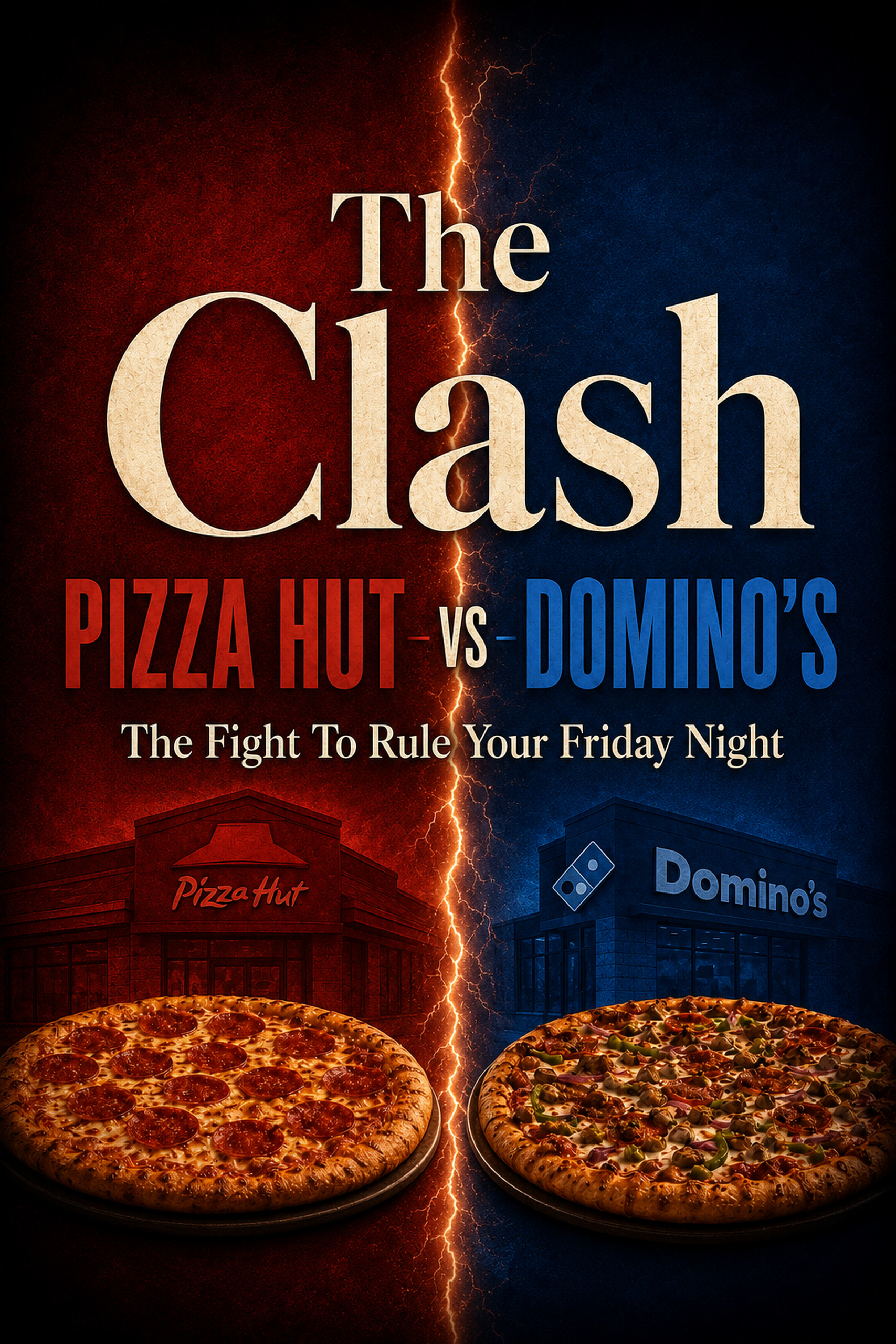
That's the quiet through-line of the whole rivalry — and it's why a company that started with a used car and a $500 down payment ended up out-innovating the giant. The full story is in The Clash: Pizza Hut vs Domino's. Read the opening chapters free.
Continue with the book
The Clash: Pizza Hut vs Domino's
The fifty-year war between the two pizza giants — told like a thriller, true to the record.
From the The Clash collection.